Tag: Headlines (Page 16 of 24)

Daily consumption for optimum health

As a follow-up to a previous article “Everything in moderation, right?“, I decided to educate my readers on substances so vital to there health daily consumption is essential. Below is a portion of “Daily Consumption“.

Coconut oil

Taken from the fruit portion of the seed off the coconut palm tree, coconut oil is one the most beneficial foods you can consume. In tropical regions where coconut oil or fat is a large portion of their caloric intake, people are much healthier and experience a much lower incidence of the modern diseases we do in the U.S. [17, 18]

There is an array of positive research published in the last few years showing the significance of coconut oil. [19] Coconut oil is classified as a “functional food” because of its health benefits that go far beyond its nutritional content. In fact, the coconut palm is so highly valued by Pacific Islanders as a source of food and medicine that it is called “The Tree of Life.” [20]

Coconut oil is the most saturated of all fats. Saturated fat has three subcategories: short chain, medium chain and long chain. Coconut oil contains approximately 65% medium chain fatty acids (MCFA). Although recognized for its health benefits many centuries ago, it wasn’t until 40 years ago that modern medicine found the source to be MCFA. Remarkably, mother’s milk contains the same healing powers of coconut oil. [21]

The saturated medium chain lipid lauric acid, which comprises more than 50 percent of coconut oil, is the anti-bacterial, anti-viral fatty acid found in mother’s milk. [22] The body converts lauric acid into the fatty acid derivative monolaurin, which is the substance that protects adults as well as infants from viral, bacterial or protozoal infections. This was recognized and reported as early as 1966. [23]

Sources located here

Did you know… raw milk can prevent allergic disorders

Does being overweight increase your risk of certain types of cancers? Does a wider grip work your lats better than a narrow grip? Get the answers to these and other questions more in my Did you know… column.

…there is evidence that raw milk prevents the development of allergic disorders? A study published in ?The Lancet? (Riedler et al, 2001), indicates that children who drank raw milk, independent of other types of exposure to farming environments, had: a 52 percent lower risk of asthma, a 57 percent lower risk of having a least one wheeze attack in a year, a 76 percent lower risk of hay fever, and a 58 percent lower risk of allergies to cows, dust mites, cat dander and pollen. Wise Traditions, 8(4):71-72,2007

…the Federal Institute for Risk Assessment in Berlin, Germany, is warning parents and pediatricians that babies should not be give soy formula without strict medical supervision? Germany joins the Israeli Ministry of Health, the French Food Agency and United Kingdom health officials in warning against the dangers of infant soy formula.

Salmon Professor Dr. Andreas Hensel stated that the main concern for infants is the high levels of estrogenic isoflavones in the formula, which act like hormones in the body. Milk allergies are not an acceptable reason for pediatricians to recommend soy formula.

The Federal Institute for Risk Assessment also issued a second warning, this one to adult consumers, stating that isoflavones offer no proven health benefits and pose a health risk. Wise Traditions, 8(4):64,2007

Lowering your cholesterol can be hazardous

Too little of one type of cholesterol has been linked to memory loss and Alzheimer’s disease.

Scientists studied more than 3,500 civil servants to investigate how levels of HDL or “good” cholesterol were associated with memory. HDL cholesterol can influence the formation of the beta-amyloid “plaques” that are a distinctive feature in the brains of Alzheimer’s patients.

Higher levels of HDL are also believed to protect against damage to blood supply caused by the narrowing of the arteries.

After the five-year study period, the researchers found that people with low levels of HDL were 53 percent more likely to suffer memory loss than people with the highest levels of HDL.

Those with impaired memory are at an increased risk of developing dementia later in life.

Arteriosclerosis, Thrombosis and?Vascular Biol. 2008 Aug;28(8)

Abductor and Adductor machines

Purpose:? These machines are designed to isolate the muscles that spread the legs apart and bring them together.

Pros:? The machines allow you to feel the burn in the targeted areas.

Cons:? Despite the perception (mostly among womem) that these machines “tone” flabby thighs, they don’t actually apply enough resistance to burn many calories.? Because they don’t allow the legs to stabilize a load like squats or lunges, the abductor and adductor don’t build much strength or muscle.? Plus opening and closing your legs in a public gym is just asking for trouble.

Verdict:? Bad.? “If you want strong, athletic looking legs,” says Jason Ferruggia, an MF training advisor, “you need to squat, lunges and deadlift.”? Those simple movements will train the thighs’ inner and outer areas much more efficiently and without comprimising your manhood.

Men’s Fitness March 2008


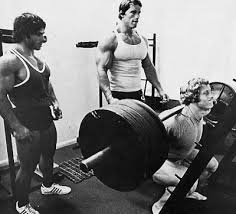
Amazingly these machines are still in many fitness centers and gyms. It isn’t bad enough that women are still using these contraptions, but amazingly I also see men using these useless machines. Why? outside of shear laziness and ignorance, I haven’t a clue. The adductors and abductors are worked to a much higher degree by performing multi-joint lower leg exercises like the squat and it’s variations.

There is no such thing as a free lunch. Working legs properly, like anything that yields good results, takes effort. If you can talk while you’re performing a set, go home. Start taking your sets to the point at which you start breathing hard and feeling a deep burn in order to get the gains you want

Low testosterone and depression

Low testosterone levels in older men are associated with an increased risk of depression, according to an?Australian study.

Between 2001 and 2004, researchers at the University of Western Australia in Perth studied 3,987 males aged 71 to 89. The men provided demographic and health information and were tested for depression and cognitive difficulties. The researchers also checked the men’s testosterone levels.

The 203 men who met the criteria for depression had significantly lower total and free (not bound to proteins) testosterone levels than those who weren’t depressed. After controlling for other factors, such as cognitive scores, education level and body-mass index, the researchers concluded that men in the lowest quintile (20 percent) of free testosterone were three times more likely to have depression compared to those in the highest quintile.

The findings were published in the March issue of the Archives of General Psychiatry.

There is more and more evidence mounting?for?medically supervised?hormone replacement therapy.?
?

« Older posts Newer posts »