Over the years it has been well established that performing exercises behind the neck, like lat pull downs, is detrimental to the shoulder joint. The unnatural movement pattern of bringing the bar behind ones head causes external rotation combined with horizontal abduction, which places the shoulder at a great risk of injury. However, when the lat pull down is performed to the front of the head, there is a lower stress on the shoulder joint because of a higher degree of stabilization by the rotator cuff muscles.
 Not only is the front of the neck lat pull down (FNL) a safer exercise, but it allows for a great range of motion. Despite the amount of empirical and anecdotal evidence illuminating the possible negative effects of behind the neck pull downs (BNL), proponents tout is greater efficacy for building bigger lats. But Is there a difference in the activity of the primary movers during different lat pull down exercises?
A recent study analyzed the electromyographical (EMG) activity of 3 different lat exercises. The exercises used where the BNL, FNL, and V-bar behind the neck lat pull (V-bar). Twenty four experienced weight lifters participated in the study performing 5 reps with each exercise, with electrodes positioned over 4 muscle bellies (pectoralis major, latissimus dorsi, posterior deltoid, and biceps brichii). Although a previous study (J Strength Cond Res 16:539-546) showed a greater activity of the latissimus dorsi muscle using FNL when compared to the BNL, this was not the case with the present study. (J Strength Cond Res 2009:23(7);2054-2060)
If your objective is to build bigger lats, than any of the 3 exercises in this study can be used with equal activation. However, with no advantage being found in this or any other study to date performing the BNL, one should question it’s use. There is no movement in sport or daily activity that the BNL mimics. Conversely, the FNL mimics movement patters in sports and daily activities helping to reduce injury and improve function.
There are a few concerns I have with this and previous studies analyzing prime mover activation in lat exercises. The distance between the hands, which were the same for this and other studies, has a huge impact on the range of motion, the load used, and EMG activation. The closer the grip one uses performing a lat pull down, the greater the range of motion and load, which consequently yields a greater activation of the prime movers.
Changing exercises alters movement patterns and muscle recruitment, which can increase or decrease the load used. A greater load, which elicits a greater EMG activation, can always be achieved with movements to the front of the neck as opposed to the back of the neck. For this reason, using the same load for all 3 exercises doesn’t show the true ability of an exercise to activate target muscles. The correct load used would be such that each exercise was performed with maximum intensity. Only then can there be an apples to apples comparison.
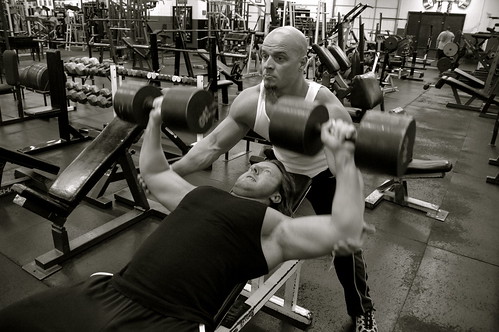 Weight training can elicit numerous benefits including injury prevention. However, weight lifting has it’s share of injuries and according to a study in Cincinnati Ohio, which examined a sample of 3713 patients, these injuries vary between genders. The objective of this study was to examine the differences in injuries associated with strength training in adolescents and young adults.