Page 59 of 120

High intensity or high volume?

The question, “What’s best workout for building strength and muscle?” has been the subject of heated debates for years.? My answer is always the same.? There is no one workout that is the best.? There is no one workout that works for all.? However, there are training principles that do apply to everybody.

Anatomically and physiologically we are identical.? A bicep is a bicep and has the exact same function from person to person.? An aorta is an aorta.? Our anatomical structures may have different shapes and sizes, but they all function the same.? This holds true for all tissues in our bodies from blood to hormones.? If this weren’t true medicine could not exist.? How could an anesthesiologist do his job if everybody were different?

Therefore, in order to get bigger, stronger muscles the same stimulus is needed.? That stimulus is short, intense training sessions.? Why short?? Because we have known for centuries the body can either train long or train hard.? A perfect example is to compare distance runners to sprinters.? Because of the types of training, one is emaciated looking and one is muscular.? Remember you can not sprint a mile.? Is it difficult to run a mile, yes?? But it is essentially impossible to run a mile with 100% intensity.

The other factor one needs to take into consideration for building bigger, stronger muscles is recovery.? How much or how often can you train?? Or better yet, how much “should” you train?? Here is where the differences in genetics lie.? Our muscles need the exact same stimulus in order to cause a chain of events that forces them to adapt by making bigger stronger muscles.? However, the rate at which we are able to recover from these intense bouts is as different as the shapes and sizes of our bodies.

So what are you to do?? If you’re training using the typical muscle building routine, which is 3 or more working sets per exercise and 4 or more sessions a week, and not getting anywhere, change it.? First, reduce your sets per exercise by half and only train each body part once a week.? If you still don’t make gains or you plateau after a short while, reduce your sets again.? Remember, if you’re training with 100% intensity and you’re not making gains, you’re not recovering.

More is only better when it comes to sex and money.????????

Did you know… raw milk can prevent allergic disorders

Does being overweight increase your risk of certain types of cancers? Does a wider grip work your lats better than a narrow grip? Get the answers to these and other questions more in my Did you know… column.

…there is evidence that raw milk prevents the development of allergic disorders? A study published in ?The Lancet? (Riedler et al, 2001), indicates that children who drank raw milk, independent of other types of exposure to farming environments, had: a 52 percent lower risk of asthma, a 57 percent lower risk of having a least one wheeze attack in a year, a 76 percent lower risk of hay fever, and a 58 percent lower risk of allergies to cows, dust mites, cat dander and pollen. Wise Traditions, 8(4):71-72,2007

…the Federal Institute for Risk Assessment in Berlin, Germany, is warning parents and pediatricians that babies should not be give soy formula without strict medical supervision? Germany joins the Israeli Ministry of Health, the French Food Agency and United Kingdom health officials in warning against the dangers of infant soy formula.

Salmon Professor Dr. Andreas Hensel stated that the main concern for infants is the high levels of estrogenic isoflavones in the formula, which act like hormones in the body. Milk allergies are not an acceptable reason for pediatricians to recommend soy formula.

The Federal Institute for Risk Assessment also issued a second warning, this one to adult consumers, stating that isoflavones offer no proven health benefits and pose a health risk. Wise Traditions, 8(4):64,2007

Lowering your cholesterol can be hazardous

Too little of one type of cholesterol has been linked to memory loss and Alzheimer’s disease.

Scientists studied more than 3,500 civil servants to investigate how levels of HDL or “good” cholesterol were associated with memory. HDL cholesterol can influence the formation of the beta-amyloid “plaques” that are a distinctive feature in the brains of Alzheimer’s patients.

Higher levels of HDL are also believed to protect against damage to blood supply caused by the narrowing of the arteries.

After the five-year study period, the researchers found that people with low levels of HDL were 53 percent more likely to suffer memory loss than people with the highest levels of HDL.

Those with impaired memory are at an increased risk of developing dementia later in life.

Arteriosclerosis, Thrombosis and?Vascular Biol. 2008 Aug;28(8)

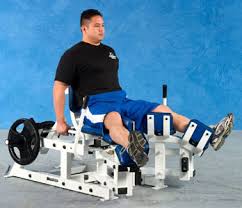
Abductor and Adductor machines

Purpose:? These machines are designed to isolate the muscles that spread the legs apart and bring them together.

Pros:? The machines allow you to feel the burn in the targeted areas.

Cons:? Despite the perception (mostly among womem) that these machines “tone” flabby thighs, they don’t actually apply enough resistance to burn many calories.? Because they don’t allow the legs to stabilize a load like squats or lunges, the abductor and adductor don’t build much strength or muscle.? Plus opening and closing your legs in a public gym is just asking for trouble.

Verdict:? Bad.? “If you want strong, athletic looking legs,” says Jason Ferruggia, an MF training advisor, “you need to squat, lunges and deadlift.”? Those simple movements will train the thighs’ inner and outer areas much more efficiently and without comprimising your manhood.

Men’s Fitness March 2008


Amazingly these machines are still in many fitness centers and gyms. It isn’t bad enough that women are still using these contraptions, but amazingly I also see men using these useless machines. Why? outside of shear laziness and ignorance, I haven’t a clue. The adductors and abductors are worked to a much higher degree by performing multi-joint lower leg exercises like the squat and it’s variations.

There is no such thing as a free lunch. Working legs properly, like anything that yields good results, takes effort. If you can talk while you’re performing a set, go home. Start taking your sets to the point at which you start breathing hard and feeling a deep burn in order to get the gains you want

Low testosterone and depression

Low testosterone levels in older men are associated with an increased risk of depression, according to an?Australian study.

Between 2001 and 2004, researchers at the University of Western Australia in Perth studied 3,987 males aged 71 to 89. The men provided demographic and health information and were tested for depression and cognitive difficulties. The researchers also checked the men’s testosterone levels.

The 203 men who met the criteria for depression had significantly lower total and free (not bound to proteins) testosterone levels than those who weren’t depressed. After controlling for other factors, such as cognitive scores, education level and body-mass index, the researchers concluded that men in the lowest quintile (20 percent) of free testosterone were three times more likely to have depression compared to those in the highest quintile.

The findings were published in the March issue of the Archives of General Psychiatry.

There is more and more evidence mounting?for?medically supervised?hormone replacement therapy.?
?

« Older posts Newer posts »