Category: Nutrition (Page 14 of 45)

The Calorie Theory Debunked

I you’re like most people, you think the only thing that matters when losing weight is calories, i.e., calories in versus calories out. The calorie theory, as you will see, is a physiological impossibility.

Calorie is a shortened name for kilocalories, to reflect the simplified math. A kilocalorie contains 1,000 calories, so the Angus Burger with bacon and cheddar is actually 770,000 “calories.” Now don’t get your panties in a bunch! This simplified math also applies to exercise calorie charts. If the cardio machine you’re using says you burned 200 calories, it’s simplified for 200,000 calories. However, don’t rely on exercise equipment charts; they are grossly inaccurate.

To understand why it’s not calories that matter when getting lean, go HERE.

Benefits of Green Tea

Tea is the second most widely consumed beverage in the world. Although water is the most widely consumed beverage, still, hundreds of millions of people drink tea every day based on health benefits and taste. Tea comes in three main varieties, black, green, and oolong. Green tea (Camellia sinesis), is believed to have the most health benefits thanks to the way it’s processed. Green tea is made from unfermented leaves, which contain the highest concentration of powerful antioxidants. Antioxidants such as polyphenols in green tea neutralize free radicals and reduce or help prevent some of the damage they cause.

Free radicals are damaging compounds in the body that alter cells, tamper with DNA (genetic material), and cause cell death. According to the University of Maryland Medical Center free radicals occur naturally in the body, but environmental toxins (including ultraviolet rays from the sun, radiation, cigarette smoke, and air pollution) also give rise to these damaging particles. Many scientists believe that free radicals contribute to the aging process as well as the development of a number of health problems including cancer and heart disease. Based on studies using human subjects, animals, and in laboratory experiments, green tea is useful for:

-Arthritis
-Atherosclerosis
-Cancer
-Colds
-Diabetes
-High Cholesterol
-Inflammatory Bowel Disease (IBD)
-Influenza
-Liver Disease
-Obesity
-Tooth Decay
-Weight Loss

Green tea has been used as a stimulant, diuretic, astringent, and to improve heart health throughout the ages in China, India, Japan, and Thailand. Other traditional include improving mental processes, promoting digestion, regulating body temperature and blood sugar, and treating flatulence (gas).

In addition to tea leaves, green tea is available in capsule form and liquid form made from leaves and leaf buds. A cup of green tea contains 50-150 mg of antioxidant (polyphenols). Decaffeinated green tea also contains polyphenols, but they are concentrated. If you are sensitive to caffeine, caffeine-free supplements are available.

What to Look for in a Weight Loss Program

For a weight loss program to be successful long term, it must be customized to fit the individual. According to renowned personal trainer Angelo Sorrenti, who charges around $10,000 for a personalized diet, supplemental recommendations, and 30 training sessions, “There’s no such thing as a diet for everyone.” This may be the reason why 90 percent of the people that go on diets regain the weight, plus a few pounds, shortly after the program is over.

Sorrenti’s success is based on simple science. He states, “Your metabolism is different than mine; your needs are different. There are diets that can be good for 10 people but can harm 10 million people.” And it makes sense. Not just the metabolism part, but also because people have allergies, ailments, and other issues that dictate what they can and cannot eat. So a diet that calls for a boiled egg, grapefruit, and coffee for breakfast could be harmful for an individual with egg allergy and/or interstitial cystitis.

For this reason, Sorrenti, and other successful weight-loss experts, will not recommend a diet and exercise program until they have thoroughly analyzed your blood work, medical history, and current physical condition. Sorrenti states that once a client has been analyzed, he can then create an all-encompassing diet and exercise plan calibrated for the individual’s needs.

So when searching for a weight loss program, consider taking a personal, not a packaged, approach. Contact several trainers, weight-loss experts, and weight loss centers and interview them. The goal is to find a program that is made just for you in order to avoid a devastating failure shortly after the program is over.

To recap, make sure the weight loss center or expert:

·Requires a physical exam
·Evaluates your blood work and physical condition
·Asks about ailments or allergies
·Evaluates your metabolism
·Will work with you one on one to create a safe and effective weight loss program

Successful weight loss programs always include exercise. You may start out with light exercise while your body adjusts, then the exercise regimen will gradually increase as your weight and energy levels increase. A weight loss program that claims to help you lose weight without exercise is a program that should be avoided if you are interested in permanent weight loss.

If you want to seek out Mr. Sorrenti, we wish you all the luck, but if you have trouble signing with the most sought after trainer in New York City, don’t worry. There are literally thousands of trainers and weight loss centers and experts around the world. It really doesn’t matter how popular they are. If they take a custom approach to individual weight-loss and former clients have walked away (and stayed away) with good results, it’s worth giving it a try.

Debunking salt myths

There are many myths about salt. The following are all false:
Myth 1: There is no difference between unrefined sea salt and refined table salt.
Unrefined salt contains over 80 minerals and elements that are useful in our body. Refined table salt, contains 2 along with chemicals that were used to process it.
Myth 2: Salt causes hypertension.
Two authors looked at 57 trials of people with normal blood pressure. A low sodium diet resulted in an insignificant reduction of blood pressure. Many other studies have found similar findings. (Blood pressure has more to do with chronically elevated insulin levels associated with a higher carb diet.)
Myth 3: A low salt diet is healthy.
Researchers have found there is no difference in deaths and cardiovascular events between low salt groups and high salt groups.
(Vitamin Research News 2008;22(1))

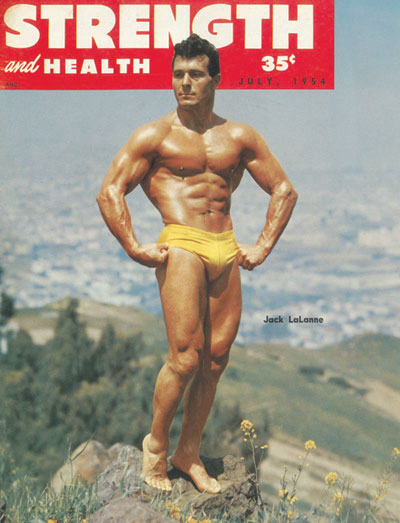
Jack LaLanne dies at 96

Jack LaLanne, (September 26, 1914 – January 23, 2011) was an American fitness, exercise, and nutritional Icon and motivational speaker who many referred to as “the godfather of fitness” and the “first fitness guru.”

“The crusade is never off my mind — the exercise I do, the food I eat, the thought I think — all this and how I can help make my profession better-respected. To me, this one thing — physical culture and nutrition — is the salvation of America.”

“Well it is. It is a religion with me,” he told What Is Enlightenment, a magazine dedicated to awareness, in 1999. “It’s a way of life. A religion is a way of life, isn’t it?”

(Jack LaLanne’s accomplishments as reported by his website)

* 1954 (age 40): swam the entire length (8,981 ft/1.7 mi) of the Golden Gate Bridge in San Francisco, under water, with 140 pounds (64 kg; 10 st) of equipment strapped to his body; a world record.
* 1955 (age 41): swam from Alcatraz Island to Fisherman’s Wharf in San Francisco while handcuffed. When interviewed afterwards he was quoted as saying that the worst thing about the ordeal was being handcuffed, which significantly reduced his chance to do a jumping jack.
* 1956 (age 42): set a world record of 1,033 push-ups in 23 minutes on You Asked For It,[22] a television program hosted by Art Baker.
* 1957 (age 43): swam the Golden Gate channel while towing a 2,500-pound (1,100 kg; 180 st) cabin cruiser. The swift ocean currents turned this one-mile (1.6 km) swim into a swimming distance of 6.5 miles (10.5 km).
* 1958 (age 44): maneuvered a paddleboard nonstop from Farallon Islands to the San Francisco shore. The 30-mile (48 km) trip took 9.5 hours.
* 1959 (age 45): did 1,000 star jumps and 1,000 chin-ups in 1 hour, 22 minutes and The Jack LaLanne Show went nationwide.
* 1974 (age 60): For the second time, he swam from Alcatraz Island to Fisherman’s Wharf. Again, he was handcuffed, but this time he was also shackled and towed a 1,000-pound (450 kg; 71 st) boat.
* 1975 (age 61): Repeating his performance of 21 years earlier, he again swam the entire length of the Golden Gate Bridge, underwater and handcuffed, but this time he was shackled and towed a 1,000-pound (450 kg; 71 st) boat.
* 1976 (age 62): To commemorate the “Spirit of ’76”, United States Bicentennial, he swam one mile (1.6 km) in Long Beach Harbor. He was handcuffed and shackled, and he towed 13 boats (representing the 13 original colonies) containing 76 people.[23]
* 1979 (age 65): towed 65 boats in Lake Ashinoko, near Tokyo, Japan. He was handcuffed and shackled, and the boats were filled with 6,500 pounds (2,900 kg; 460 st) of Louisiana Pacific wood pulp.[24]
* 1980 (age 66): towed 10 boats in North Miami, Florida. The boats carried 77 people, and he towed them for over one mile (1.6 km) in less than one hour.
* 1984 (age 70): handcuffed, shackled, and fighting strong winds and currents, towed 70 rowboats, one with several guests, from the Queen’s Way Bridge in the Long Beach Harbor to the Queen Mary, 1 mile.[25]

« Older posts Newer posts »