Category: Foods products (Page 10 of 22)

Did you know… raw milk can prevent allergic disorders

Does being overweight increase your risk of certain types of cancers? Does a wider grip work your lats better than a narrow grip? Get the answers to these and other questions more in my Did you know… column.

…there is evidence that raw milk prevents the development of allergic disorders? A study published in ?The Lancet? (Riedler et al, 2001), indicates that children who drank raw milk, independent of other types of exposure to farming environments, had: a 52 percent lower risk of asthma, a 57 percent lower risk of having a least one wheeze attack in a year, a 76 percent lower risk of hay fever, and a 58 percent lower risk of allergies to cows, dust mites, cat dander and pollen. Wise Traditions, 8(4):71-72,2007

…the Federal Institute for Risk Assessment in Berlin, Germany, is warning parents and pediatricians that babies should not be give soy formula without strict medical supervision? Germany joins the Israeli Ministry of Health, the French Food Agency and United Kingdom health officials in warning against the dangers of infant soy formula.

Salmon Professor Dr. Andreas Hensel stated that the main concern for infants is the high levels of estrogenic isoflavones in the formula, which act like hormones in the body. Milk allergies are not an acceptable reason for pediatricians to recommend soy formula.

The Federal Institute for Risk Assessment also issued a second warning, this one to adult consumers, stating that isoflavones offer no proven health benefits and pose a health risk. Wise Traditions, 8(4):64,2007
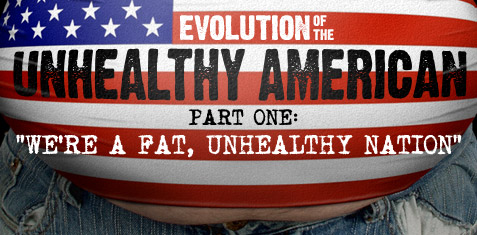
The fattest countries

“Behold: the world’s 10 fattest countries” a recent article published on the GlobalPost, discusses the world-wide rise in obesity and ranks the top 10 fattest countries. Although the author mentions processed food and inactivity as the causes of obesity, she fails to go into detail. I do not feel an article on the obesity epidemic is doing justice by not mentioning sugar, in particular high fructose corn syrup, or vegetable oils. These two foods, and I use the term “foods” loosely, Are increasing in use around the world as they have in the US. Vegetable oil consumption in the US, including hydrogenated oils, has increased 437%. (1) Sugar consumption went from 5 pounds per year in 1900 to 163 pounds per year today. From 1970 to the present, fructose and vegetable oil consumption have increased over four fold.(2) During this same time saturated fat has decreased over 20%.

Because we’ve decreased saturated fat consumption and increasing vegetable oil and carbohydrate consumption like the “experts” at the AMA and the ADA (American Dietetics Association) have advised for decades, you’s think we’d be getting healthier. However, we in the US are getting fatter and more unhealthy and are taking the world with us.

1. America Samoa 93.5% – percent of population that is overweight
2. Kiribati 81.5%
3. U.S. 66.7%
4. Germany 66.5%
5. Egypt 66%
6. Bosnia-Herzegovina 62.9%
7. New Zealand 62.7%
8. Isreal 61.9%
9. Croatia 61.4%
10. United Kingdom 61%

Soy lecithin, hormone replacement, high fat diets and HFCS

Mike weighs in on the pros and cons of hormone replacement therapy, soy lecithin, creatine and HFCS. He also reminds us that while there is a lot of good information on the internet, it’s important to research and consult with experts before using a product. Just because a product is legal doesn’t mean it’s safe or that it works.

Here’s a sample from the article:

Q: Hi Mike,

I was doing some research on HGH in my downtime, and the use of it to treat chronic conditions and developmental issues. Now, I came across this website http://www.rajeun.net/ as a result of my surfing. I had a look at the eight-point anti-aging program this guy has sorted out for himself and thought to myself, ?Gee Justin, be pretty cool if that worked, right??

Now some of it sounds like the usual bunkum; EDTA chelation seems to fit into that category for example.

But — and it’s a big but — in your opinion, if this guy keeps at what he’s been doing, does he have a routine that might give him an advantage over the rest of us when it comes to staying healthier for that bit longer? And following up, if you yourself wanted to go about living for a very long time, would you go down the same path this dude is going down?

In closing, respect for all for your time and encouragement Mike, a whole heap of people appreciate your attitude and your efforts in keeping guys fitter, healthier and happier.

Best regards.

A: Justin,

When it comes to living longer, does it give him an advantage over us? I don’t think there is enough evidence to answer that question. One thing is for sure, your quality of life definitely improves. Men who properly use hormone replacement therapy show an elevated sense of well-being and mood. If it didn’t work, it wouldn?t be such a huge business. There are anti-aging clinics popping up all over the world.

There are parts of his program however, that are a little suspect. Two that jump out at me are EDTA chelation for getting rid of metals in the body, and taking Vermoc to get rid of parasites. My advice to Ellis is to get the hell out of that God-forsaken toilet of a country.

Another part of his program that I take exception to is his endorsement of using Erythropoietin or EPO. EPO is a drug used in the clinical setting to increase hematocrit (red blood cell) levels. EPO is a natural substance produced by the kidneys that stimulates bone marrow to manufacture red blood cells. This drug, if used improperly, can result in death — as seen with Olympic athletes trying to gain an edge in endurance events.

Low hematocrit levels can be caused by many different conditions including blood loss, chemotherapy, HIV or nutritional deficiencies. Obviously, if the cause is nutritional, you’d want to use supplements, not a drug. Just because your hematocrit is low normal, it is no reason to jump on EPO. What Mr. Mexico doesn’t understand is that the drugs he is on, especially testosterone, increases your hematocrit levels. I believe Ellis’ site is a little on the irresponsible side.

Mike

HFCS is nothing like the sugar in fruit

HFCS has been marketed as a “natural sugar” being just like the sugar found in fruit. Well nothing could be further from the truth. Not only is it molecularly unlike leveulose, fruit sugar, it is also metabolized and absorbed differently. HFCS is very cheap and has made its way into literally tens of thousands of products from bread to beer. And unfortunately it’s even used in health foods from protein bars to powders. Read about why this heavily marketed product should be avoided completely here.

Almonds to beat down that hunger

Looking for a snack to kill that between meal hunger? Try almonds. 28g, aproximatey 20 – 25 alomonds provides 5.9g of protein, 13.8g of fat, and 6.1g of carbohydrates. Don’t be alarmed by the fat content. The fat is what will suppress your appetite, and 62% of the fat found in almonds is oleic acid. In comparison, olive oil contains 71% oleic acid. This fatty acid has strong anti-inflammatory properties and is what gives olive oil it’s outstanding reputation. 7% of the fat content is palmitic acid and 2 percent is stearic acid. Both of these saturated fatty acids are the preferred energy source of the heart, which is why the fat surrounding the heart is highly saturated.

Unfortunately, up to 30% of the fat found in almonds is the polyunsaturated fat linoleic acid. This is a double unsaturated omega 6 fatty acid that has been shown to be pro-inflammatory, immuno-suppressive, and shown to cause weight gain. Thankfully, almonds have enough of the good fats to compensate for the bad polyunsaturated fats.

A good source of fiber 20 -25 almonds contain 3.4g. Also Rich in minerals, almonds contain good amounts of calcium, magnesium, potassium, and zinc. So if your feeling hungry and you need something to munch on to hold you till the next meal, give almonds a try.

Nutritionaldata.com
Westonaprice.com
Enig,Mary. Know Your Fats. Silver Spring: Bethesda Press, 2000

« Older posts Newer posts »