Author: Mike Furci (Page 13 of 65)

U.S. News and World Report; Best hospitals of 2010-2011

US News and World Report ranks America’s hospitals? They also rank colleges, law schools and medical schools. I’ve read that these institutions go through great lengths to improve their standings because these reports have so much influence. This year, only 152 of the 4,852 hospitals evaluated performed well enough to rank in any specialty. And of the 152, just 14 qualified for a spot in the Honor Roll by ranking at or near the top in six or more specialties. Below are the top 3 in three major categories.

Cancer:
#1 University of Texas M.D. Anderson Cancer Center
Houston, TX
#2 Memorial Sloan-Kettering Cancer Center
New York, NY
#3 Mayo Clinic
Rochester, MN
#9 Cleveland Clinic
Cleveland, Ohio

Heart and Heart Surgery:
#1 Cleveland Clinic
Cleveland, OH (Hometown pride)
#2 Mayo Clinic
Rochester, MN
#3 Johns Hopkins Hospital
Baltimore, MD

Neurology and Neurosurgery:
#1 Johns Hopkins Hospital
Baltimore, MD
#2 Mayo Clinic
Rochester, MN
#3 Massachusetts General Hospital
Boston, MA
#6 Cleveland Clinic
Cleveland, Ohio

Go to USNews see all the rankings of the best hospitals including the top children’s hospitals

Jack LaLanne dies at 96

Jack LaLanne, (September 26, 1914 – January 23, 2011) was an American fitness, exercise, and nutritional Icon and motivational speaker who many referred to as “the godfather of fitness” and the “first fitness guru.”
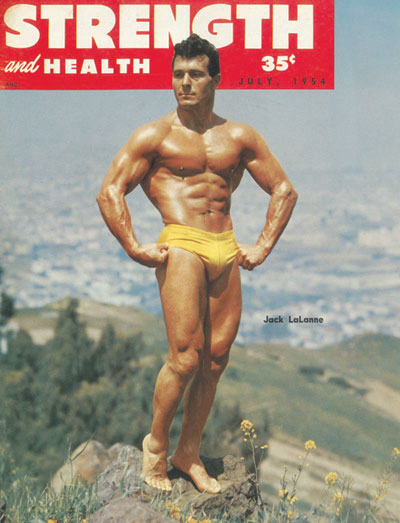
“The crusade is never off my mind — the exercise I do, the food I eat, the thought I think — all this and how I can help make my profession better-respected. To me, this one thing — physical culture and nutrition — is the salvation of America.”

“Well it is. It is a religion with me,” he told What Is Enlightenment, a magazine dedicated to awareness, in 1999. “It’s a way of life. A religion is a way of life, isn’t it?”

(Jack LaLanne’s accomplishments as reported by his website)

* 1954 (age 40): swam the entire length (8,981 ft/1.7 mi) of the Golden Gate Bridge in San Francisco, under water, with 140 pounds (64 kg; 10 st) of equipment strapped to his body; a world record.
* 1955 (age 41): swam from Alcatraz Island to Fisherman’s Wharf in San Francisco while handcuffed. When interviewed afterwards he was quoted as saying that the worst thing about the ordeal was being handcuffed, which significantly reduced his chance to do a jumping jack.
* 1956 (age 42): set a world record of 1,033 push-ups in 23 minutes on You Asked For It,[22] a television program hosted by Art Baker.
* 1957 (age 43): swam the Golden Gate channel while towing a 2,500-pound (1,100 kg; 180 st) cabin cruiser. The swift ocean currents turned this one-mile (1.6 km) swim into a swimming distance of 6.5 miles (10.5 km).
* 1958 (age 44): maneuvered a paddleboard nonstop from Farallon Islands to the San Francisco shore. The 30-mile (48 km) trip took 9.5 hours.
* 1959 (age 45): did 1,000 star jumps and 1,000 chin-ups in 1 hour, 22 minutes and The Jack LaLanne Show went nationwide.
* 1974 (age 60): For the second time, he swam from Alcatraz Island to Fisherman’s Wharf. Again, he was handcuffed, but this time he was also shackled and towed a 1,000-pound (450 kg; 71 st) boat.
* 1975 (age 61): Repeating his performance of 21 years earlier, he again swam the entire length of the Golden Gate Bridge, underwater and handcuffed, but this time he was shackled and towed a 1,000-pound (450 kg; 71 st) boat.
* 1976 (age 62): To commemorate the “Spirit of ’76”, United States Bicentennial, he swam one mile (1.6 km) in Long Beach Harbor. He was handcuffed and shackled, and he towed 13 boats (representing the 13 original colonies) containing 76 people.[23]
* 1979 (age 65): towed 65 boats in Lake Ashinoko, near Tokyo, Japan. He was handcuffed and shackled, and the boats were filled with 6,500 pounds (2,900 kg; 460 st) of Louisiana Pacific wood pulp.[24]
* 1980 (age 66): towed 10 boats in North Miami, Florida. The boats carried 77 people, and he towed them for over one mile (1.6 km) in less than one hour.
* 1984 (age 70): handcuffed, shackled, and fighting strong winds and currents, towed 70 rowboats, one with several guests, from the Queen’s Way Bridge in the Long Beach Harbor to the Queen Mary, 1 mile.[25]

Depression: placebo vs prescription drugs

Those who study depression and the drugs that treat it are concluding that antidepressants are no different than a placebo or “sugar pill”.

Placebos are widely used when studying pharmaceuticals. E.g., in a controlled clinical trial, one group will be given the real medication while another group is given a placebo in order to observe if the effects of the drug are due to the medication or to the power of suggestion.

Research has found that patients do improve on SSRIs, tricyclics, and even MAO inhibitors. This conclusion is the basis for blindly prescribing antidepressants to anyone who complains of being depressed.
When researchers compare the improvement in patients taking medication, however, with the improvement in those taking a placebo, they find that the difference is minuscule.

The magnitude of benefit of antidepressant medication compared with placebo increases with severity of depression symptoms and may be minimal or nonexistent, on average, in patients with mild or moderate symptoms. For patients with very severe depression, the benefit of medications over placebo is substantial.

JAMA 2010

These trials comprised 10030 depressed patients who participated in 52 antidepressant clinical trials evaluating 93 treatment arms of a new or established antidepressant. Fewer than half (48%, 45/93) of the antidepressant treatment arms showed superiority to placebo.

Int Jour of Neuropsychopharmacology

Despite the failure of prescription drugs when compared to a placebo for mild to moderate depression, the number of Americans taking antidepressants doubled in a decade, from 13.3 million in 1996 to 27 million in 2005. Is this increase due to an increase in the prevalence of severe depression? Of course not. Walk into a doctor’s office and complain about being depressed; most will prescribe an anti-depressant on the spot. This is mainly due to western medicines lack of a holistic approach to the body, and big pharma’s hold on our medical community and society in general.

Never doubt the power of the mind. In many cases, a person’s beliefs are as or more effective than drugs when it comes to achieving health.

New research: cut back on carbs, live longer

According to the 2002 United States Life Tables, In 2002 the average person in the US could expect to live a little over 19 years longer than in 1920. But does longevity come with a healthy life? Not for most. Arthritis, Alzheimer’s, cardiovascular disease, deteriorating senses, and other diseases and conditions all come with age. However, new research may have uncovered a true fountain of youth, and it may be as simple as cutting down on consuming carbs.

Professor Cynthia Kenyon, a US genetisist, has discovered that the carbohydrates we eat like bananas, potatoes, bread, pasta, and cakes directly affect two key genes that govern youthfulness and longevity.

But what Professor Kenyon found out was why ­drastically reducing calories has such a remarkable effect.

She discovered that it changed the way two crucial genes behaved. It turned down the gene that controls insulin, which in turn switched on another gene, which acted like an elixir of life.

‘We jokingly called the first gene the Grim Reaper because when it’s switched on, the lifespan is fairly short,’ she explains.

The ­second ‘elixir’ gene seems to bring all the anti-aging benefits.

Professor Kenyon has changed her diet as a result of her research.

‘Carbo­hydrates, and especially refined ones like sugar, make you produce lots of extra insulin. I’ve been keeping my intake really low ever since I discovered this.

‘I’ve cut out all starch such as potatoes, noodles, rice, bread and pasta. Instead I have salads, but no sweet dressing, lots of olive oil and nuts, tons of green vegetables along with cheese, chicken and eggs.

‘I’ll have a hamburger without a bun and fish without batter or chips. I eat some fruit every day, but not too much and almost no processed food. I stay away from sweets, except 80 per cent chocolate.’

She is adamant it will be well worthwhile. ‘You could have two completely different careers if you could stay healthy to 90,’ she says. ‘How fascinating that would be.’

READ MORE

Turn back father time by exercising correctly

It’s no secret, the positive anti-aging effects Human growth hormone and insulin-like growth factor-1 has on the body including increased fat metabolism, increased muscle mass, increased bone density, collagen rejuvenation, and more. Although the exact mechanisms that are most efficacious for stimulating release of these anti-aging hormones remains some-what of a mystery, scientists are getting closer.

Evidence suggests that load and frequency are determining factors in the regulation of hGH secretion. Despite the significant exercise-induced growth hormone response (EIGR) induced by resistance training, much of the stimulus for protein synthesis has been attributed to insulin-like growth factor-1 with modest contributions from the hGH-GH receptor interaction on the cell membrane. The EIGR to endurance exercise is associated with the intensity, duration, frequency and mode of endurance exercise. A number of studies have suggested an intensity ‘threshold’ exists for EIGR. An exercise intensity above lactate threshold and for a minimum of 10 minutes appears to elicit the greatest stimulus to the secretion of hGH. Exercise training above the lactate threshold may amplify the pulsatile release of hGH at rest, increasing 24-hour hGH secretion. The impact of chronic exercise training on the EIGR remains equivocal. Recent evidence suggests that endurance training results in decreased resting hGH and a blunted EIGR, which may be linked to an increased tissue sensitivity to hGH.
Sports Med. 2003;33(8):599-613.

« Older posts Newer posts »