Category: Weight training (Page 6 of 26)

A conversation with Drew Brees’ trainer Todd Durkin about TRX Suspension Training

New Orleans Saints quarter back Drew Brees celebrates after the Saints defeated the Indianapolis Colts 31-17 in Super Bowl XLIV at Sun Life Stadium in Miami on February 7, 2010. Brees was named MVP for the game. UPI/Rob Hobson

At your local gym, you may have been offered a chance to try out a tool called the TRX Suspension Training, which is an innovation by former elite Navy SEAL Randy Hetrick.

As a Navy SEAL, Hetrick often found himself in remote safe houses with limited means to keep he and his soldiers in shape. Using only salvaged parachute materials, Hetrick created what would eventually be named the ?Best Total Body Tool? by Men?s Health magazine.

The TRX Suspension Trainer was born.

One of the many trainers that have incorporated TRX not only in his athletes? workouts, but also into his own workouts is Todd Durkin. Of the many athletes Todd works with during the offseason, perhaps his most recognized is New Orleans Saints? quarterback Drew Brees.

During the offseason, Brees flies all the way from Louisiana to train with Durkin and the TRX, which obviously speaks to Todd?s credibility as a trainer. And considering Brees is coming off a Super Bowl win this past February, clearly Todd?s methods work.

We recently had the opportunity to chat with Todd about a variety of topics, including his work with Drew, TRX and the ?Get with the Movement? campaign, which is defined as a rally cry that dares American fitness enthusiasts to free themselves of their everyday routine. It encourages people to get off their exercise machines and take a more dynamic, moment-focused approach to building their overall health and achieving personal goals.

We also asked Todd to share his favorite Drew Brees story, what specific workouts he uses to train a Super Bowl-winning quarterback and how the TRX can help everybody from the ?weekend warrior? to yes, even grandma.

For more on Todd, TRX and his new book The Impact! Body Plan, please visit www.fitnessquest10.com and www.todddurkin.com.

Also for more on the ?Get with the Movement? campaign, visit www.getwiththemovement.com.

Anthony Stalter: Hey Todd, how are you?

Todd Durkin: Real good! Things have been a little crazy around here, but it?s exciting with the new book coming out.

To read the entire interview, click here.
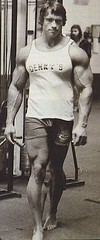
Just F-in squat

Some say the squat is the king of all leg exercises. They even go as far as saying that if you don?t squat, your chances of building big, strong legs are next to impossible. And there are others who even take it one step further, claiming the squat is the best overall exercise there is period, and no routine should be without one.

Yes, I agree that the squat is unquestionably a very productive exercise in that it works a large number of major muscle groups. More so than any other exercise, however, it is not essential to do the barbell squat in order to get muscular and strong legs. More-over, for some the pain caused by injuries or anatomy makes this exercise very uncomfortable and unproductive. For instance, those who have very long legs and short torsos have trouble doing squats due to bad bio-mechanics. Some people need alternatives, but, for this Exercise of the Month article I focus on how to perform the barbell squat properly and show how to change what muscles are emphasized.

A no-nonsense guide to designing your workouts

In my recently rewritten article “A no-nonsense guide to design your workouts“, which is a three-part series, I offer no BS ways for beginners and veterans alike to keep their workouts fresh while consistently making gains.

Everywhere you turn these days, weight training seems to be the focus. And why shouldn’t it be? A proper weight training program produces many positive effects, including: increased muscle mass; reduced body fat; increased bone density; improved insulin sensitivity; improved self-esteem; and overall well-being. The list goes on. Yet with all the information available, why is it so hard for people to make progress? Because most of what is out there is BULLSHIT!!

Helping people is what being a trainer and a coach is all about. Most publishers and editors are so hell-bent on selling magazines, they print things like this: “Put 2 inches on your arms in 21 days;” “Have a chest like Arnold’s in just 6 weeks.” People, just like you, purchase this type of trash in the hopes that it might work. These writers and editors rely on your ignorance.

Having the knowledge and ability to help somebody achieve their goals goes far beyond writing an article about workouts. Writing workouts is actually a pretty easy thing to do. Just about anyone with a little bit of knowledge can do it, and many ? unfortunately — do. The barriers to entry to become a personal trainer are so low, most certificates aren’t worth the paper they’re written on. In contrast, look at the barriers to entry to become a nurse. Several years of school filled with prerequisites, in which you need a 78 percent just to pass, coupled with many hours of hands-on clinicals. What education does a trainer need? Send away for some study guides, take a test, and “Bam!” you’re a certified trainer.

More Creatine

Creatine is perhaps the most researched supplement on the planet. Yet new data on the benefits of supplementing with this incredible substance is still mounting. Canadian researchers compared the changes in insulin-like growth factor-1 (IGF-1) amounts in 2 groups of subjects. All the subjects performed at least 30 minutes of structured physical activity 3 -5 X?s per week for eight weeks. The subjects were randomly assigned to one of two groups: One supplementing with creatine, the other, an isocaloric placeo. Muscle biopsies were taken before and after the training period and analyzed for IGF-1 content. The creatine group had a 24% higher level of IGF-1. The creatine group also had a 23% higher increase in type II muscle fibers. These findings were independent of dietary guidelines. (Int J Sport Nutr Exerc Metab, 2008; 18(4))

What does this mean for the average Joe? It means if you supplement with creatine, you?ll not only get the well known ?volumizing? effect, but added lean mass.

Exercise can be bad for your health

We all know that exercise is good for our health. Exercise helps to improve our cardiovascular system, and respiratory system; resistance exercise helps to improve muscle function and will prevent age associated muscle atrophy. But did you know exercise, especially high intensity exercise by flooding it with free radicals. Free radicals are chemical marauders that can affect every cell in your body causing DNA mutations, premature aging, cell death, muscle weakness, fatigue and chronic oxidative stress.

So how can you get the best benefits of regular exercise?without placing your body at risk in the process? Proper antioxidant support is one effective way: Extensive research shows that safe, natural substances including vitamins A, C and E, N-acetyl cysteine, lutein, rosemary leaf extract, turmeric, green tea, bilberry and grape seed extract are all potent free radical quenchers?and you can find all of them in a single daily formula from Vitamin Research Products called Extension Antioxidant.6-15

Supplementing with nutrients that will help your body to replenish its essential ATP levels is another key strategy?one that will improve muscle function plus increase your heart?s stamina and help it to keep up with the demands for more ATP during exercise.16

D-ribose is a pentose sugar that can help to maintain ATP regeneration in your body, especially following exercise. Studies document that D-ribose can supply extra amounts of ATP to your heart muscle in particular.17-18 Meanwhile, the popular antioxidant coenzyme Q10 (CoQ10) also plays a vital role in ATP synthesis, and can improve energy production when your body is under physical stress.19 It?s no surprise, then, that research shows that regular CoQ10 supplementation can boost exercise tolerance, lessen fatigue and improve physical performance in active subjects.20-23

Whether you?re a casual exerciser or an amateur athlete, look for the highly bioavailable form of CoQ10, preferably the second generation CoQ10-H2?, to combine with Extension Antioxidant and D-ribose?which are all available from VRP?for a supplement-based strategy that can reduce your recover time plus maximize your strength, energy and endurance throughout each and every workout.

www.vrp.com

« Older posts Newer posts »