Category: Anti-Aging (Page 6 of 21)

4 causes of aging

In his book, “The Most Effective Ways to Live Longer”, Johnny Bowden identifies what he calls “the four horsemen of aging,” which are thought to be dangerous processes that age our bodies and are triggered by the foods we eat and the lifestyles we lead. Conquer these four horsemen, Bowden contends, and you can slow down the aging process.

1. Free radicals: Free radicals are chemically unstable molecules that attack your cells and damage your DNA. You can limit your exposure to them by avoiding cigarettes, trans fats, charred meats, and other sources.

Organic fruits and vegetables will also limit your exposure to pesticides and herbicides, which contain the harmful molecules.

2. Inflammation: Inflammation is a major player in many diseases of aging, including cancer, diabetes, heart disease, and Alzheimer’s. One way to avoid it is to follow a Mediterranean-style diet.

Other great anti-inflammatory foods include turmeric, dark chocolate, and the anti-aging chemical resveratrol. Exercise is another great way to lower inflammation.

3. Glycation: Glycation is what happens when sugar mixes with proteins and fats to form molecules that promote aging. Advanced glycation end products, or AGEs (Isn’t that an appropriate acronym?), are thought to accelerate your aging process by churning out free radicals and promoting inflammation. One way to avoid ingesting AGEs is to turn down the heat when you cook. The browning effect of high-heat cooking causes these molecules to form. Limiting your intake of sugar-filled foods in general will also help.

4. Stress: Stress initiates the release of a variety of hormones that make your pulse race and cause your blood pressure to rise. The hormone cortisol, released to lessen these effects, also creates problems when it remains chronically elevated. Try practicing relaxation techniques to help manage stress, and get enough sleep every night.

U.S. News & World Report July 29, 2010

Benefits of Green Tea

Tea is the second most widely consumed beverage in the world. Although water is the most widely consumed beverage, still, hundreds of millions of people drink tea every day based on health benefits and taste. Tea comes in three main varieties, black, green, and oolong. Green tea (Camellia sinesis), is believed to have the most health benefits thanks to the way it’s processed. Green tea is made from unfermented leaves, which contain the highest concentration of powerful antioxidants. Antioxidants such as polyphenols in green tea neutralize free radicals and reduce or help prevent some of the damage they cause.

Free radicals are damaging compounds in the body that alter cells, tamper with DNA (genetic material), and cause cell death. According to the University of Maryland Medical Center free radicals occur naturally in the body, but environmental toxins (including ultraviolet rays from the sun, radiation, cigarette smoke, and air pollution) also give rise to these damaging particles. Many scientists believe that free radicals contribute to the aging process as well as the development of a number of health problems including cancer and heart disease. Based on studies using human subjects, animals, and in laboratory experiments, green tea is useful for:

-Arthritis
-Atherosclerosis
-Cancer
-Colds
-Diabetes
-High Cholesterol
-Inflammatory Bowel Disease (IBD)
-Influenza
-Liver Disease
-Obesity
-Tooth Decay
-Weight Loss

Green tea has been used as a stimulant, diuretic, astringent, and to improve heart health throughout the ages in China, India, Japan, and Thailand. Other traditional include improving mental processes, promoting digestion, regulating body temperature and blood sugar, and treating flatulence (gas).

In addition to tea leaves, green tea is available in capsule form and liquid form made from leaves and leaf buds. A cup of green tea contains 50-150 mg of antioxidant (polyphenols). Decaffeinated green tea also contains polyphenols, but they are concentrated. If you are sensitive to caffeine, caffeine-free supplements are available.

Debunking salt myths

There are many myths about salt. The following are all false:
Myth 1: There is no difference between unrefined sea salt and refined table salt.
Unrefined salt contains over 80 minerals and elements that are useful in our body. Refined table salt, contains 2 along with chemicals that were used to process it.
Myth 2: Salt causes hypertension.
Two authors looked at 57 trials of people with normal blood pressure. A low sodium diet resulted in an insignificant reduction of blood pressure. Many other studies have found similar findings. (Blood pressure has more to do with chronically elevated insulin levels associated with a higher carb diet.)
Myth 3: A low salt diet is healthy.
Researchers have found there is no difference in deaths and cardiovascular events between low salt groups and high salt groups.
(Vitamin Research News 2008;22(1))

Choosing a Massage Therapist

Each state has its own licensing requirements for massage therapists, so the first thing to consider when seeking the services of a massage therapist is license & credentials. In order to practice massage therapy in most states, the massage therapist must have a license obtained from the state’s massage therapy board. In other states, such as Wyoming, there are no state requirements, but license requirements exist within the different municipalities.

Before booking your first appointment, all you have to do is check your state licensing board website to verify a license. To verify the validity of a massage therapist’s license, you will need the therapist’s certificate number, city of residence, and first and last name. To locate your state board of massage therapy website, visit The Massage Register. The Massage Register lists massage therapy requirements by state and direct links to state boards.

If you have made it to the license verification point in the selection process, chances are you are already pretty sure of the type of massage you are interested in, whether you prefer a male or female, and how much you want to spend. If not, the information to follow will be very useful. Besides choosing whether you prefer a male or females, knowing what type of massage you’re interested in will help narrow your choices.

There are a number of specialty areas in the massage therapy industry. Some massage therapists may be certified in several specialty areas, while others may be certified in just one. Just a few of the most popular specialty areas include:

·Swedish Massage
·Aromatherapy Massage
·Deep Tissue Massage
·Hot Stone Massage
·Thai Massage
·Shiatsu
·Back Massage
·Sports Massage
·Reflexology
·Prenatal Massage

If you’re interested in both Swedish and hot stone massage, choose a massage therapist that’s licensed in your state and certified in both areas. If you’re interested in sports massage only, choose a massage therapist that’s licensed in your state and certified in sports massage. To verify certification, ask the therapist for the name of the school or program that awarded the certificate to make sure the program it is accredited. If the massage therapist works in a professional setting, you might not have to ask. The therapist will likely have a license and certificate(s) on displat, in plain view.

Next, contact the school or program to verify accreditation and certification. Most programs are more than willing to verify credentials and accreditation status. The accrediting agencies for massage therapy schools and programs are as follows:

Accrediting Bureau of Health Education Schools (ABHES)
Website: www.abhes.org

Accrediting Council for Continuing Education & Training (ACCET)
Website: www.accet.org

Accrediting Commission for Career Schools & Colleges of Technology (ACCSCT)
Website: www.accsct.org

Accrediting Council of Independent Colleges & Schools (ACICS)
Website: www.acics.org

Council on Occupational Education (COE)
Website: www.council.org

Commission on Massage Training Accreditation (COMTA)
Website: www.comta.org

Distance Education & Training Council (DETC)
Website: www.detc.org

North Central Association of Colleges & Schools (NCACAS)
Website: www.ncacasi.org

Ministry of Advanced Education and Labour Market Development
Website: www.gov.bc.ca/aved

Department of Education
Website: www.education.gov.yk.ca

When it comes to pricing, you will find that rates vary greatly depending on geographic location (small or large city, suburbs), setting (spa, resort, hotel, wellness center, private studio), experience, and type of massage. For example, in a large city, the cost for Swedish massage may start at around $90-$100 for one hour. A day spa in a small city may start at around $75 for an hour.

Resorts typically start at around $105 for a fifty-minute Swedish massage, while a luxury hotel, such as Trump International Hotel & Tower in Chicago, may charge $150 for a classic 60-minute massage. Specialty massages, regardless of setting and other factors, always cost more. Expect to pay roughly $50 (or more), above the cost of a Swedish massage for a hot stone massage, sports massage, Thai massage, or other specialty massage.

One final piece of advice when choosing a massage therapist. It is important that you are comfortable with your therapist or the experience can be unpleasant. An initial consultation is highly recommended. If you feel comfortable with the therapist after the consultation, but during the session you begin to feel any discomfort, please let the therapist know right away. Fortunately, most professional therapists will ask for feedback during the session in an effort to make you feel as comfortable as possible.

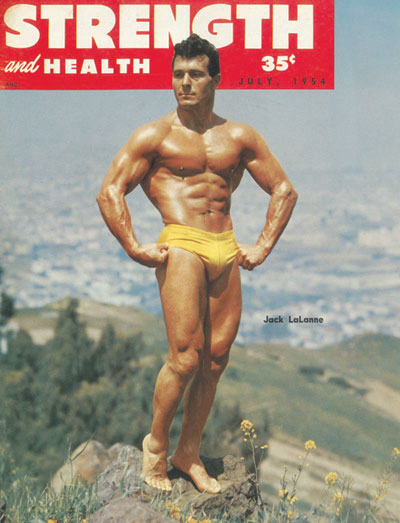
Jack LaLanne dies at 96

Jack LaLanne, (September 26, 1914 – January 23, 2011) was an American fitness, exercise, and nutritional Icon and motivational speaker who many referred to as “the godfather of fitness” and the “first fitness guru.”

“The crusade is never off my mind — the exercise I do, the food I eat, the thought I think — all this and how I can help make my profession better-respected. To me, this one thing — physical culture and nutrition — is the salvation of America.”

“Well it is. It is a religion with me,” he told What Is Enlightenment, a magazine dedicated to awareness, in 1999. “It’s a way of life. A religion is a way of life, isn’t it?”

(Jack LaLanne’s accomplishments as reported by his website)

* 1954 (age 40): swam the entire length (8,981 ft/1.7 mi) of the Golden Gate Bridge in San Francisco, under water, with 140 pounds (64 kg; 10 st) of equipment strapped to his body; a world record.
* 1955 (age 41): swam from Alcatraz Island to Fisherman’s Wharf in San Francisco while handcuffed. When interviewed afterwards he was quoted as saying that the worst thing about the ordeal was being handcuffed, which significantly reduced his chance to do a jumping jack.
* 1956 (age 42): set a world record of 1,033 push-ups in 23 minutes on You Asked For It,[22] a television program hosted by Art Baker.
* 1957 (age 43): swam the Golden Gate channel while towing a 2,500-pound (1,100 kg; 180 st) cabin cruiser. The swift ocean currents turned this one-mile (1.6 km) swim into a swimming distance of 6.5 miles (10.5 km).
* 1958 (age 44): maneuvered a paddleboard nonstop from Farallon Islands to the San Francisco shore. The 30-mile (48 km) trip took 9.5 hours.
* 1959 (age 45): did 1,000 star jumps and 1,000 chin-ups in 1 hour, 22 minutes and The Jack LaLanne Show went nationwide.
* 1974 (age 60): For the second time, he swam from Alcatraz Island to Fisherman’s Wharf. Again, he was handcuffed, but this time he was also shackled and towed a 1,000-pound (450 kg; 71 st) boat.
* 1975 (age 61): Repeating his performance of 21 years earlier, he again swam the entire length of the Golden Gate Bridge, underwater and handcuffed, but this time he was shackled and towed a 1,000-pound (450 kg; 71 st) boat.
* 1976 (age 62): To commemorate the “Spirit of ’76”, United States Bicentennial, he swam one mile (1.6 km) in Long Beach Harbor. He was handcuffed and shackled, and he towed 13 boats (representing the 13 original colonies) containing 76 people.[23]
* 1979 (age 65): towed 65 boats in Lake Ashinoko, near Tokyo, Japan. He was handcuffed and shackled, and the boats were filled with 6,500 pounds (2,900 kg; 460 st) of Louisiana Pacific wood pulp.[24]
* 1980 (age 66): towed 10 boats in North Miami, Florida. The boats carried 77 people, and he towed them for over one mile (1.6 km) in less than one hour.
* 1984 (age 70): handcuffed, shackled, and fighting strong winds and currents, towed 70 rowboats, one with several guests, from the Queen’s Way Bridge in the Long Beach Harbor to the Queen Mary, 1 mile.[25]

« Older posts Newer posts »