Category: Foods products (Page 17 of 22)

Q&A with Mike Furci 2/4

In his latest question and answer session, Bullz-Eye.com Fitness Editor Mike Furci lays out the ground work to a sound diet and exercise plan, rehashes the definition of ?tone? with a reader and dispels a myth about exercising stunting your growth when you?re young.

Q: Hey Mike!
I was reading your posts on your website about how to lose love handles and I was very interested in your responses. Losing this extra weight around my waste is such a problem for me! Even though I am a very small girl I can?t seem to attain that hourglass figure — I feel like my midsection looks like a box. I was wondering if you had any advice for me concerning foods, exercises and things I need to eliminate. For instance, does alcohol really make you gain weight? Even when I do drink, I order Bacardi and Diet Coke. Recently I completely eliminated fast food, fried food and soda from my diet. Also, I don?t eat after 10 p.m., ever! But still feel like I see no results. Maybe you could set me up with the right foods to eat and when to eat them. Also what to stay away from and what I should work on at the gym to target this concern of mine. If you could get back to me I’d really appreciate it!

To read Mike?s answer, click here to read the entire Q&A article.

Deceptive fructose ads.

Fructose is found in everything from soda to cereal. It?s literally in thousands of products. The ?fat carb? has been in our food supply for more 35 years. We?ve been led to believe that fructose from high fructose corn syrup (HFCS) is akin to naturally occurring sugar,

Recently ads hyping high fructose corn syrup (HFCS) for its similarities to sugar are hitting the airwaves. This is part of a major marketing campaign from the Corn Refiners Association meant to combat the bad rap that HFCS has gotten in the past years.

To get that message out, the campaign relies on nutritional research. But CBS News has learned that funding for many of the major studies came from companies with a financial stake in the outcome.

Of the six studies CBS News looked at on the association?s Web site that ?Confirm High Fructose Corn Syrup is No Different From Sugar,? three were sponsored by groups that stand to profit from research that promotes HFCS. Two were never published so their funding sources are unclear. And one was sponsored by a Dutch foundation that represents the interests of the sugar industry.

Pepsi funded one study, so did a D.C. based lobbying group that gets their money from food, chemical and drug companies. And the American Beverage Association gave a grant for another.

One researcher who was involved in three of the studies, Dr. James M. Rippe, a cardiologist and founder of the Rippe Lifestyle Institute says there is no link between HFCS and obesity and calls contrary evidence ?accusations? and ?speculation.? Rippe?s ties with industry are no secret.

Russ Bianchi, a pharmacologist and toxicologist, explains: ?There is no safe form of fructose available from any source, unless already existing in an unprocessed apple or other piece of fruit. The science is known and epidemiologically proven.? For more HFCS facts Click HERE.

Diet and Tesosterone Levels

A recent study performed in Finland included men ages 49 to 73 who underwent 21 weeks of supervised training and dieting. Half the subjects ate a high-fiber, low-fat diet including grains, fruits, vegetables, lean meat, fish and dairy. This diet led to a decline in men?s testosterone. The study also found that subjects who ate more protein and had a fat intake of at least 30 percent had higher levels of testosterone and improved muscular gains. Eating less than 30 percent fat seemed to adversely affect hormone levels. The amount of fiber did not have an adverse effect on building muscle or hormone levels. (Intl J Sports Med. 28(12):1070-1076)
(Did you know… 10-30-08)

Good Calories, Bad Calories By Gary Taubes

For decades we have been taught that fat is bad for us, carbohydrates are good, and that the key to a healthy weight is eating less and exercising more. Yet with more and more people acting on this advice, we have seen unprecedented epidemics of obesity and diabetes. With seven years of research, Taubes argues persuasively that the problem lies in refined carbohydrates (white flour, sugar, easily digested starches) ?via their dramatic effect on insulin, the hormone that regulates fat accumulation?and that the key to good health is the kind of calories we take in, not the numbers. There are good calories, and bad ones. Taubes traces how the common assumption that carbohydrates are fattening was abandoned in the 1960’s when fat and cholesterol were blamed for heart disease and then?wrongly?were seen as the causes of a host of other maladies, including cancer. He shows us how these unproven hypotheses were emphatically embraced by authorities in nutrition, public health, and clinical medicine, in spite of how well-conceived clinical trials have consistently refuted them. He also documents the dietary trials of carbohydrate-restriction, which consistently show that the fewer carbohydrates we consume, the leaner we will be.

Good Calories Bad Calories is the end of the debate about the foods we consume and their effects on us.

Common ingredients that add major calories to your meals

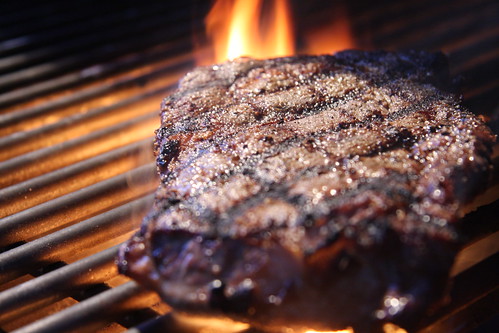
SteakMen’s Fitness.com posted an interesting article about common ingredients in meals that surprisingly come jammed-packed with calories.

DROWNING FOOD IN OIL
Yes, it’s heart healthy, but also high in calories. Sautéed vegetables only need to be misted with oil—not swimming in it. Buy an empty spray bottle and fill it with olive oil. Then spray your food and the pan lightly before cooking.

USING REAL SUGAR
Switch to artificial sweeteners; some of them can even be used for baking. If you can’t stand the aftertaste, try combining two different sweeteners—this blending helps impart more sweetness and less artificial taste, says Stokes.

COOKING TOO MUCH MEAT
No substitute can emulate the taste of a steak, but if you’re making a meal like chili or tacos, swap some of the ground beef for less fatty soy crumbles or tofu, suggests Stokes. Not a fan of soy? Try mixing ground beef with black beans, diced cherries, or any other fresh vegetable or fruit.

USING FULL-FAT CHEESE
Not even our expert would touch the fat-free stuff, but Stokes does recommend switching to a reduced-fat version. “It adds flavor, melts well, and retains the normal properties of cheese,” he says. Cabot light cheddar, for one, tastes almost identical to the full-fat stuff.

Oil is an interesting note. We all hear about how Olive Oil is great for you, but over-doing it obviously has its disadvantages.

« Older posts Newer posts »